19 May 2016

10 Great Things in the Past 3 Months

It seems appropriate to resume blogging today, the EIGHTH ANNIVERSARY of starting this blog!!  Here's a link to the very first blog post. Now read on for a sadly overdue update.

1. We built a house.

A family in Oregon paid for a new house for a widow with small children. She is one of the clients who we visited back on Christmas Day. In February, Fred organized several women in the community to volunteer making mud and a few construction professionals came in to do the specialty work. After the house was finished, two friends bought Benta a bed and mattress and new kitchen things. The family is so much more secure and happy than they were six months ago!

2. Mama Maisha expanded to 3 new villages.

 With the generous support of the community of Mama Maisha donors in the Asheville, NC area, we were able to expand to three new villages in February.  The village of Kyangasaga is about half Muslim and the vast majority of women deliver at home.
The village of Lwanda (our community leader meeting is pictured here...I had no house help that day, so the kids had to come with me!) say they never receive help from outsiders and they are so excited to work with us.  The village of Nyahera is familiar to me because our friend Stephen and many of the poor clients we get to serve live in this village.

3. Wesley turned 4!

We can't believe this kid is growing up so fast.  He got a remote-controlled car, which he was very excited about.  He's dealing with the drama of feeling all the feelings, but not sure how to process that.  He's strong-willed and very loyal. His favorite people are the young men who drive motorcycles and taxis.

4. We had visitors from Mama Maisha US.

In March we were joined by our co-founder, Dr. Jeff, and one of his colleagues, Dr. Marina, and they helped us with training of our Maternal Health Advocates.  After a great few days with our existing and new MHAs, we spent the next week visiting each of our villages. 
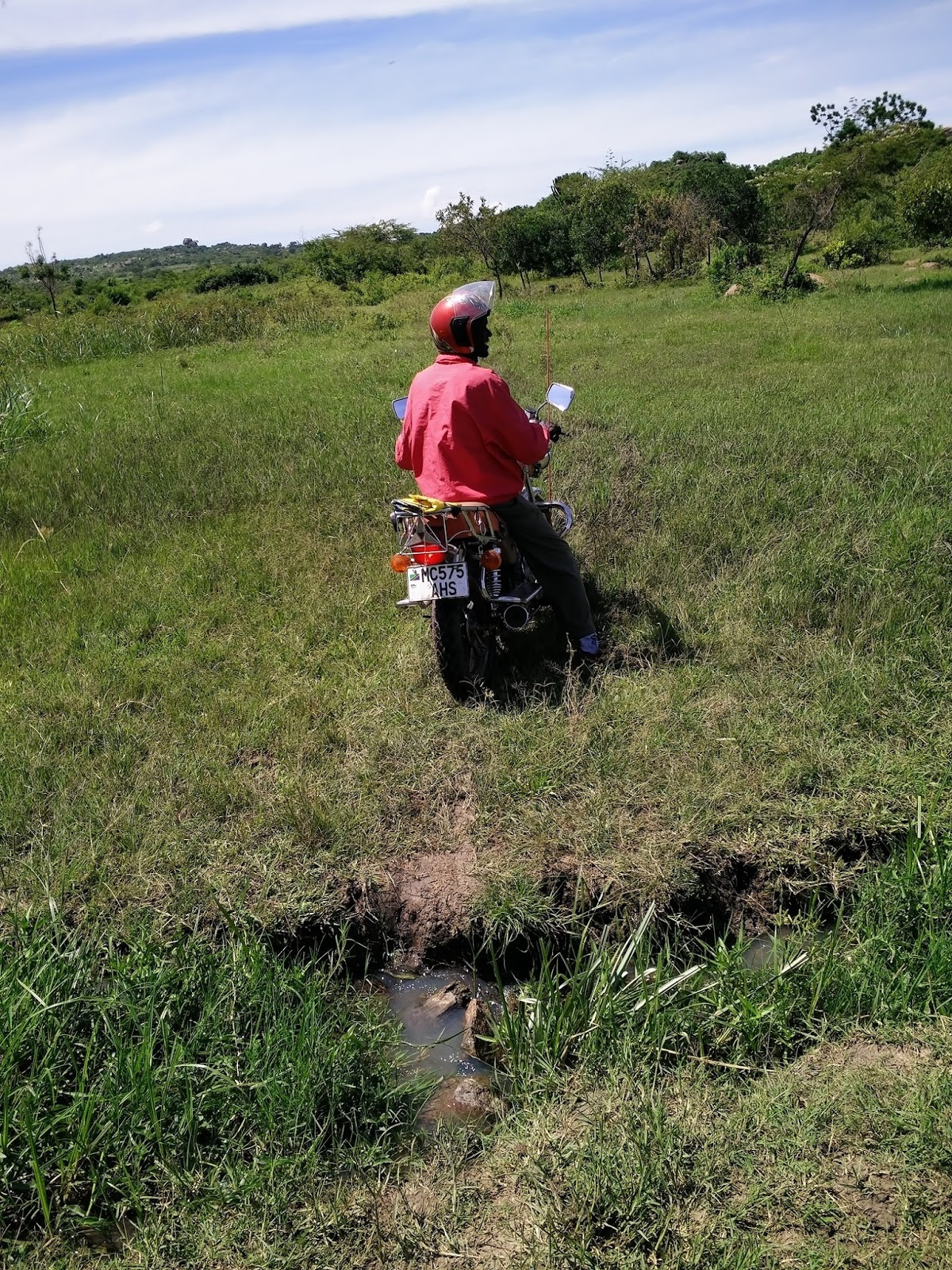
In Nyahera we had a men's community meeting to talk about their questions about contraception.  In Kyangasaga over 150 women showed up to hear about maternal health. One-third of those women were pregnant and received a birth kit as a gift for registering with our new MHAs.  In Nyambogo we visited some TBAs, demonstrated the implant form of birth control, and took photos with these infant twins, named Barry and Leisha, who were born prematurely and got supplementary milk support through us.  We also served as an ambulance from this remote village for a young woman who had been tossed by a bull and was suffering a concussion.  In Lwanda we trained Traditional Birth Attendants and drove through a ravine to visit the closest health facility. It was in Lwanda when I gritted my teeth, crossed my fingers, and gunned it through a puddle as wide as the road.  My teammates dubbed me Han Solo and our hired car the "Millennium Falcon."  In Roche we doubled up on motorbikes to make it down the cow paths to another community meeting where I gave advice about how men could get their wives to have more sex, among other things.

5. Inno came home for holidays.

We were so happy to have Innocent home during April! The kids had a lot of fun playing together, and he was a big help with the little kids. Fred was traveling a lot during April, so having another pair of slightly-bigger hands to help out was great.  He started at a new school (again) back in January, and he has adjusted so quickly! He was selected to be the "Class Senator" which is kind of like the class prefect, and he's number two in his class as well.

6. We celebrated 5 years of marriage.

We got away for about 30 hours to Musoma to celebrate at a small hotel on the lake.  It's been a wonderful five years, and I'm so grateful to be sharing this adventure with Fred. 


7. We distributed food to needy families.
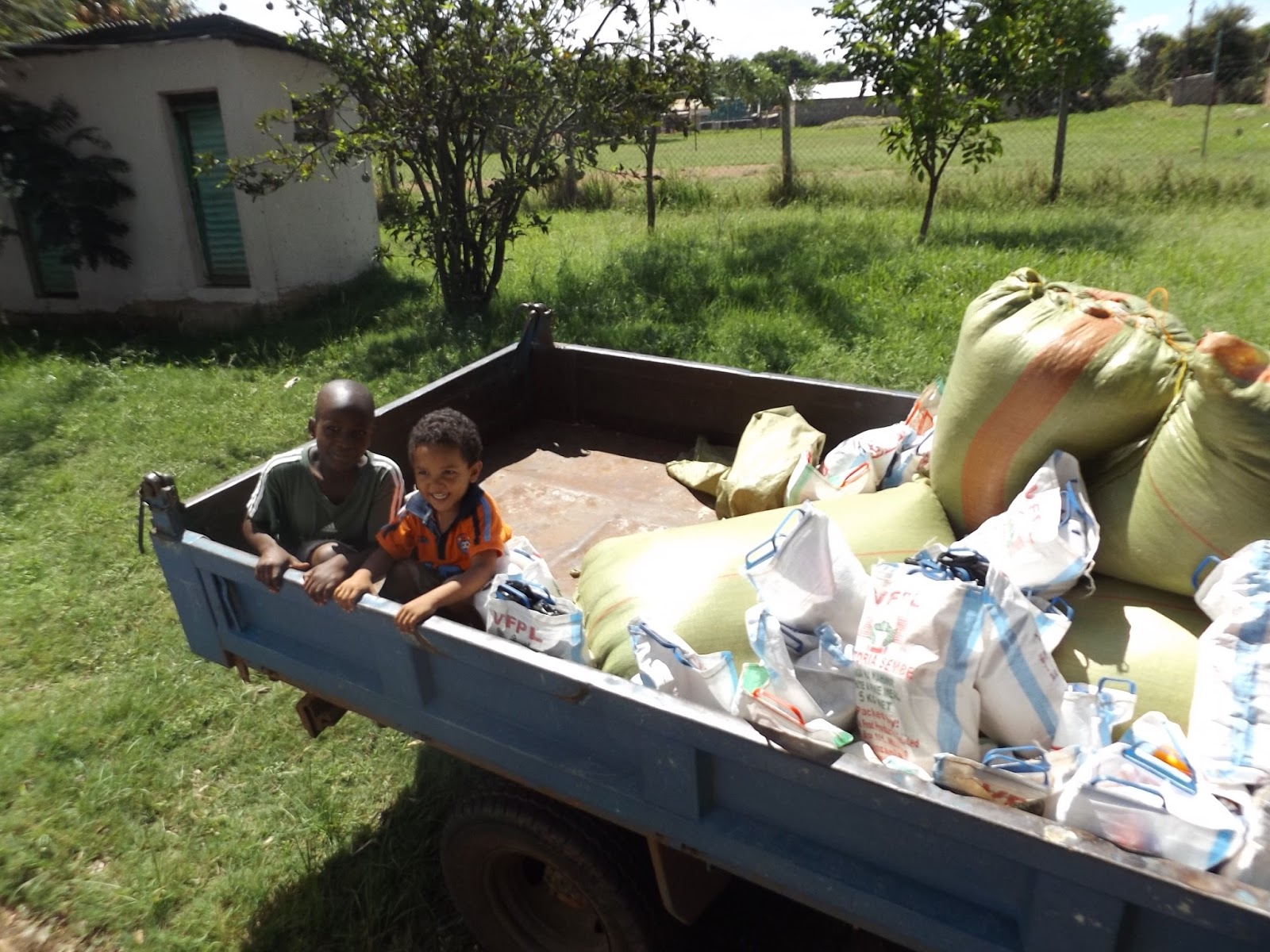
A small church in Medical Lake, Washington, raised money to provide some food for needy families.  In April, our whole family got to be part of the first distribution of that food.  We met widows and widowers and representatives from child-headed households and paralyzed patients. Each family got maize and beans, salt and oil. After a few more months we will arrange another distribution.
Thank you, Makarios Fellowship!

8. We bought a car!

Actually, I should say that we were given a car.  In less than six weeks, we raised $10,000 to purchase a 24-year-old Toyota LandCruiser in good condition. Many friends gave toward this amazing gift, and we are so grateful.  It is already making our life so much easier, and we are eager to use it for village visits for Mama Maisha and for our other clients.

9. We moved to Mwanza.

At the end of April we finished packing up five years of life in Shirati and moved to Mwanza, Tanzania.  It's a city right on Lake Victoria, about five hours south of Shirati.  
Fred has taken a job doing program development with the African Inland Church of Tanzania, Mwanza Diocese.  He's busy launching new programs, many of them based on relationships he developed with people we worked with in Shirati.  It's great to see so many people appreciating my husband's work ethic, creative ideas for improving people's lives, and his strict truthfulness regarding finances and outcomes. He's getting into working with people with albinism, doing more training for trauma healing, and helping implement a program to provide income generation for people in rural communities.  
We're living in a church guest house while we wait for our church house to be ready (probably about six months), and the kids are loving their new house, especially since they get to hang out with their friends, Kaleb and Micah, so much more.  I have been networking with other organizations which are doing similar work to Mama Maisha and preparing for the upcoming Lahash East Africa Conference, which will be here in Mwanza.

Check back next week to read about a few things that are upcoming!


04 February 2016

Three Big Things: Politics, Race and Refugees

Sorry for missing the past two weeks.  I had some internet problems that wouldn't allow me to get online on my computer, and have you ever tried typing a whole blog post on a mobile phone?  No, thank you very much.  Here are a few things I've been thinking about lately:

1. The American Presidential Election
The political geek in me is kind of reveling in the election coverage, especially since I can choose exactly how much I want to engage with it.  I listen to a couple of political podcasts and I read one or two news sites and I read many of the articles and opinions that people post on Facebook, though I try not to get sucked into debates (except when people lie about refugees...that really gets my goat.)

From the people who I met during the first 23 years of my life, I get very conservative information, such as:

  • Why You Should Support Ted Cruz - he's a real evangelical conservative, he's been "chosen by God", it's your "duty" as a Christian to support a fellow Christian, etc.
  • Why You Should Support Donald Trump - he speaks the "truth", he'll make America "great again," he'll keep all those Muslims and immigrants out, etc.
  • Why You Should Support a Real Conservative Instead of Donald Trump - usually this is another bid for Ted Cruz.  I don't think I know a single politically vocal person supporting anyone else.  A few months ago there was a lot more interest in Carson and Fiorina, but that seems to have died down.
  • Why Hillary Clinton is Corrupt and Evil and Bernie Sanders is a Lunatic and Will Impoverish Us All
 From the people I met during the next decade of my life, during much of which I lived and worked and went to church in Portland, I get more liberal information, about three main topics:

  • Bernie Sanders, specifically why people who support him are neither stupid nor delusional
  • Why a Donald Trump Presidency = End of the World  (Not the end of the world "as we know it" but the end of the world...period.  There is also talk of Canadian immigration policies.)  Very recently these opinions have been joined by the Ted Cruz Is No Better chorus.
I do also have a couple of friends very adamantly supporting Hillary, including one who took a year off work to go volunteer on her campaign, but they don't make a lot of angry noise online.

All this contributes to a very loud, opinionated environment.  I have my own personal political views, and none of those headlines above represents my view or my vote, but I find it all very interesting.

2. Black American Voices

First, a disclaimer: Black Americans and Africans are not the same at all.  Also different from both of those are African Americans.  I don't use the term African American because I think of African Americans as people like my friends the Khamasis who are actual Africans who are now Americans as well.  The culture of Black Americans and African Americans (according to my definition) are different, although there is overlap because of the environment of having black skin in America.

I got connected to a hilarious black woman blogger over at Awesomely Luvvie because Jaime the Very Worst Missionary linked to Luvvie's hilarious post about the recent State of the Union address.  The way Luvvie writes is brilliant and hilarious, but I have very few black American friends and I was very unused to the slang she uses.  (It took me a good little while to figure out that "alphet" meant outfit.) I'm used to not understanding 100% of what's being said to me, so I pressed on to read a lot of the archives and enjoyed every single moment of it.  Then I followed her on Facebook and now get to read all of her many followers' comments as well.  I'm getting an education.

Here's my epiphany:
Luvvie and her commenters (who are mostly hilarious black women and a few hilarious black men and a very few white people) are a very unique voice in my life.  I realized how very white my world is while reading Luvvie, because her voice is so starkly different.  Her vocabulary and point of view are pretty obvious chocolate sprinkles on the very vanilla cultural world I'm consuming.  (Although I'm not talking about literal voice, for the past year NPR has had a fascinating ongoing debate about why black radio presenters on NPR sound like Ira Glass, and from the several NPR podcasts I listen to, I can certainly hear their point.)

I know a lot of my friends, especially from Imago Dei, are interested in having a not-so-vanilla world, as am I, and I'm realizing that it's not just going to happen organically.  We need to go follow some black voices on Twitter and read some blogs and listen to some music and read some books and watch some movies that aren't designed to appeal to educated, upper middle class white people.  I recommend Luvvie as a great place to start.  (By the way, I just watched "Do The Right Thing" for the first time, and that 27-year-old movie could have been made yesterday...except for the clothes.)

3. The Refugees are Still Out There
Given that the vitriol and conflict over refugees has died down in the political and Facebook worlds, I take it that the Syrian and Iraqi refugees are passing back out of the public dialogue.  While that is bound to happen, since we can't talk about all the things all the time, it's tragic, because there are lives on the line.

Here are just a few headlines to remind us all to continue in prayer for safety and provision for refugees and for peace in the Middle East.

Madaya: "Another 16 starve to death" in besieged Syrian town - 30 January 2016
A standoff between government and rebel groups has trapped about 40,000 people in the town of Madaya where no medicine or food is being allowed in, nor are the sick and dying allowed out.  If you want the truth, it's not hard to find pictures of starving children living off of grass and pet cats.

Nearly 40 refugees and migrants perish in latest Aegean boat sinking - 1 February 2016
Many were women and children, and more than 200 people have drowned in the freezing Aegean Sea since the first of the year.  Nearly 60,000 people fled across the sea in leaky boats during the month of January.  Remember the picture of the body of that toddler who washed up on the shore last year? He has a lot of company so far this year.

Refugee crisis: 10,000 unaccompanied children targeted for sex work and slavery - 31 January 2016
More than 26,000 unaccompanied children entered Europe last year (according to Save The Children) and nearly half of those children have disappeared.  Some of them may have been reattached to family members, but many are suspected to have been abducted into the human slave trade. Even those who have not disappeared have reported being extorted and sexually abused as they seek safety.

God, guide us in prayer and in speech and in action on behalf of our sick and dying and exploited sisters and brothers, daughters and sons, mothers and fathers.

14 January 2016

My Husband is a Rebel

The book I'm currently rereading is Better Than Before by Gretchen Rubin--a book about forming good habits and breaking bad habits.  The cornerstone of her theories about habit forming is that one approach won't work for everyone, and that there are essentially Four Tendencies that personalities fall into which dramatically affect how we are able to form habits based on our responses to inner or outer obligations.

Last week I talked about my tendency: Obliger.  I am 100% an Obliger, responding primarily to external expectations but totally inept at forcing myself to do something just because it's good for me.  I spend an enormous amount of psychic energy considering what other people want or need from me and how to meet those expectations.  This is the most common personality type.

Another type is the Questioner.  This is kind of the reverse of the Obliger, because it's a personality who will do anything that he or she understands and is convinced of the value of that choice.  For example, a Questioner would begin exercising if he believed that he needed to exercise and that the type of exercise chosen is going to be effective to meet his goals.  This is also a very common personality type, and I think of my friend Reta, who very frequently asks, simply "Why is that?" in response to virtually any scenario.

More rare is the Upholder personality type, and when I read about this type, I understood my friend, Katie, in a new way.  One time she and I were traveling together and she got separated from her luggage, which had been locked in an office.  I spent a considerable amount of time trying to convince her, very Obliger-y, that it would be very inconvenient to find the person with the keys and call them back to give her the bag.  Wouldn't it be easier to just manage without so as not to inconvenience anyone?  She adamantly refused, stating that she needed the things in her bag and would not be able to go overnight without them.  We got the bag, but I was surprised at this unexpected layer of granite in her, because she was usually very responsive to others' expectations of her.  She is an Upholder, which means she responds to both external and internal obligations.

And then there is the Rebel.  The Rebel is one who rejects all sense of obligation or expectation, both inner and outer.  A Rebel wouldn't say "I should set a regular bed time so that I feel well-rested" or "People are expecting to see us at the wedding," but instead Rebels say I only do what I want to do right now.  They can still form habits, but only habits that are in line with their own strongly held values.  As I read about the Rebel's dislike for hierarchy and rules and (to them) incomprehensible social structures, I saw my husband, who was kicked out of a Catholic pre-seminary for challenging the priests on theology, and regularly spars with power-holders in our society.  His strongly held value of justice motivates him to accomplish a lot on behalf of people who don't hold much power, but he is the bane of any bureaucrat's existence, since he refuses to fill out time cards or fill out paperwork that doesn't seem practical to him.  Since he values accountability, he will collect receipts, but if someone protests that the receipts he has provided are not an acceptable format, he rejects that adherence to formality without function.

In the book, Rubin states that many Rebels marry Obligers, and they appreciate the stability that an Obliger's compulsions provide.  (For example, if Fred can't bring himself to sit down at the computer to answer emails, he delegates that task to me.  I feel so obligated by the expectation of the person waiting for a response that I readily agree and get a lot of satisfaction from it.)  Obligers find the Rebel's disregard for expectations freeing, to which I can certainly attest.  Whenever we receive a fundraising card for a wedding or a send-off, I feel compelled to give money and attend the event, even though attending the 8-hour ordeal of a casual acquaintance's wedding is grueling.  He has saved me a lot of money and stress by releasing me from those "obligations."  A good friend of mine living in Uganda is also an Obliger married to a Rebel, and I can think of one or two other couples who are probably in the same club.  I can say that I'm very grateful for my Rebel husband.  He accomplishes so much that I never would, and he inspires a lot more balance and freedom in my own life.

(Now I have the song "He's a Rebel" by The Crystals stuck in my head..."Just because he doesn't do what everybody else does, that's no reason why I can't give him all my love.")

06 January 2016

What Will My New Year Look Like?

First, an update
In the last blog post, Tears on Christmas Day, I shared about some families that we reached out to on Christmas Day to share food with them.  The response of readers has been so wonderful.  One couple, who have already helped this family a lot, are giving money for a bed and school uniforms and food for Grace, Pita and the kids.  Another family from Oregon has adopted Mama Saidi and her two little ones, giving $1,000 to build them a better house and provide some food, a mattress and some other necessities, and have committed to $20 each month to continue ensuring the health and welfare of the kids.  A church in Washington is preparing to take an offering to provide another food supplement for the other six families.

We are so excited to facilitate these gifts that will have such an impact on the lives of these vulnerable families!

Next, an admission
I have terrible discipline, but I recently read that most people wish they had better self discipline, so that made me feel a little better.  I know many people feel like New Year's resolutions are pointless, but I have the kind of personality which needs a reason and a significant point of start to make a change in my life.

One of my favorite authors, Gretchen Rubin, who has been frequently mentioned on this blog, wrote a book about forming habits called Better Than Before.  It's been out for a while, but I got bogged down trying to listen to it on audio when I really needed to sit down with my journal and take notes.  I've restarted reading it to boost the goal I made for 2016.  According to her Four Tendencies personality structure, I am an Obliger, which means that I am good at meeting others' expectations of me, but I am rubbish at meeting my own expectations of myself.  She is spot on, and I'll give you an example: When my husband is home, I pretty much bathe every day (laudable, I know), because he appreciates when I'm, y'know, clean and not stinky.  When Fred is away, though, I am hit-or-miss with the whole bathe every day thing.  (In a weak attempt to defend myself, bathing here is not just jumping in the shower.  It involves heating water on the stove and hauling it into the bathroom and bathing from a bucket with a cup.  Oh, and of course there are two toddlers who can't stand for me to be out of their eye line for more than one minute who also need to be bathed in warm water.)  Anyway, the point is that Fred's expectation of having a clean wife is stronger motivation for me than my own desire to not be grubby.

Finally, a goal
So this year, on New Year's Eve, I sat down and wrote a list of the things I am unsatisfied about in my life.  These are things I should be doing every day, but seem to take an enormous amount of discipline to get done.  When I looked at my list of 6-8 things, I realized that most of them could be incorporated into a better morning routine.  So my goal for 2016 is to create better habits in the morning,  I have a little checklist, and I'm incorporating some accountability to actually empower me to stick with my routine.  Six days in, I'm doing well, although the one factor that I thought would ensure my success--getting up earlier than my kids--is not working out.  My usually late-sleeping kids have decided that whatever time I wake up, they should wake up, so I'm dealing with a lot of static during the morning, trying to get them started well on their day at the same time as I'm reading my Bible and doing the other checklist things.

Anyway, that's what is going on around our house.  Kudos to all of you trying to make a positive change in your life right now, and if you need some accountability, let me know!

26 December 2015

Tears on Christmas Day

This was our third Christmas in Africa as a family.  The first year it was just me and Fred and a 7-month baby bump.  We had no gifts for each other, no special dinner, Fred was traveling and just reached home on Christmas morning.  God blessed us by opening a hotel in our town that day, so we had a nice dinner out.

Two years ago we took the boys (and an 8-month baby bump) to the beach in Mwanza.  We had a great time playing at the beach on Christmas and Boxing Day, and ate hotel food for Christmas dinner.

This year we had planned to go back to Mwanza to play on the beach and in a swimming pool, but Fred and I have been traveling so much lately that staying in yet another ubiquitous hotel room didn't sound all that appealing, so we decided to save money and stay home.  Then God moved us to spend that money on food for some of the families we've been interacting with this past year.  We bought 50 kilos of rice, 25 kilos of sugar, and 10 1-liter bottles of oil.  I baked a bunch of Christmas cookies and made little cards and wrapped up a bag of cookies for each family.  Our friend Stephen and our house helper, Adera, split up the food into eight portions, and on Christmas Day Stephen, Fred and Wesley delivered the packages.


First they visited Grace and Pita and Pita's kids, who received a water system at their home from the Ryding family earlier this year.  They found the family walking back from church.  Fred asked Pita, the blind daughter, what she was hoping to eat for Christmas.  "Rice, but we don't have any," she replied. They got the joy of making her modest Christmas wish come true.


Some of the homes they were going to were off-road, to say the least!  Wesley told Fred "This isn't a safe place to drive!"  The next home was of a family which had received a new house from Shantz Mennonite Church.  The HIV+ single mother who was the intended beneficiary of the house died the day before the Shantz team was to build the house, so instead they gave money to build a new home for the orphaned children later on.


When Fred, Stephen and Wesley arrived on Christmas morning, they found that the two young children are now being cared for by their teenage sister-in-law, who also brought her young sister to live there.  Milka, that child bride, probably an orphan herself, was so ill that she was lying on a mat in the compound. All the kids were gathered around watching her suffer. There was literally no food in the house.  None of them had eaten the day before and there was not even a match to light the fire. The children's faces when they saw the cookies and food brought tears to my eyes.

The next home was of a man Fred has been interacting with for several years.  Ramadhan has been paralyzed from the neck down since adolescence.  Through the palliative care he receives medicine to manage the chronic pain he lives with, and he has used the gifts from that program to start a small business selling bars of soap and matches to people in the neighborhood.  Prior to the visit from the Shantz Mennonite team, he would spend all day lying on his mat in front of his home in the glaring sunshine or pouring rain. The team built him a shade so that he can be more comfortable while doing his business. His elderly mother who cares for him was given the food to prepare for their meal.

The next stop was to a family we've never met before, but Stephen knows their situation well.  Saidi was a palliative care client of Stephen's who died in the past year from AIDS. His widow and children received a new roof on their house from a Canadian woman who visits each year to do projects like this.  When they reached the house yesterday, they found the door closed, so they started walking to find Mrs. Saidi and encountered her returning from a neighbor's house where she had gone to beg food for her toddler.  All that boy was going to eat for Christmas was a piece of chapati that the neighbor had flung in his direction.  As you can see in the photo,  he couldn't take his eyes off those cookies!  The baby girl has no clothes, but we have a bunch of baby clothes donated for Mama Maisha, so Stephen will return with some clothes for that little one.

Last February Fred worked with that same Canadian lady and gift from our friends, the Rickeys, to build a house and water system for this widow and her two grandchildren, who had been living in a tiny, dilapidated house.  They met the ladies coming from church.  The grandmother, Lucia, said she had to go to church to worship because God has done so much for them this year.  Asking some questions, Stephen found out that they really had very little food in the house, and nothing special to eat for Christmas day, but still they were giving thanks. How many of us could find that faith?

Johanes was the very first client I ever met in Shirati.  He is a paraplegic who is in the palliative care program as well.  This year a friend of ours in Newberg paid for Johanes to get a new house and a new bed and mattress.  Johanes is so proud of his new home, and eager for his new water tank, courtesy of a British friend.  They found two neighbor boys there chasing a snake out of the house. We are concerned about his security, since he has no phone and can't move to find help, so Fred is looking for a special low-power cell phone and flashlight to help increase his comfort still more.


Obadia is another client of Stephen's who lives in a village on the lake front.  He is also paralyzed and sits in the market area, where people might bring him a fish from their catch for him to eat or to sell.  Often those with physical or mental disabilities are neglected by their families, and they rely on whatever support the community can provide.

This was the end of Wesley's rope, although he did a really great job spending three hours on the back of a motorbike (hence the helmet) with an empty stomach himself, handing out Christmas cookies to other kids.  Inno has a bad cough or he would have gone as well, because we think it is so important for our kids to have exposure to poverty and difficult circumstances, and to be part of serving the vulnerable.  It is one of the major blessings of living in rural Africa as a family.

Stephen and Fred dropped Wesley off at home and went to one last house.  Lucy and her teenage son were living in a very poor house, practically homeless in fact, until last July when the Shantz Mennonite team came and built her a new house.  Their hand prints are in the mud walls of her house, and she is very proud of this home. She is making small improvements, even though she is lame and walks with a cane.  Fred and Stephen arrived at lunch time and found no food or cooking fire, so she was very appreciative of the food they brought.  She wished they could stay so that she could cook for them and share a meal, but both men had their families waiting at home, so they excused themselves.

We love working with Stephen because of his great heart, and he told Fred that for him, this is the very best way of celebrating Christmas.  Although we couldn't go as a family, these stories really impacted us all.  Having Wesley to represent us made the clients feel like this was really a gift from our hearts to them, not a project, and bringing our young son into the homes of clients communicates that we are not afraid of their illness, a stigma that keeps many people away.

We want to take this chance to thank the many donors who have contributed to these families or to our personal support.  These financial gifts enable us to live here and engage with the most vulnerable people in our society, meeting physical needs and offering love and fellowship to many who sit in dark corners.  If you have been part of our support team, you are part of this work!

If you would like to help us continue caring for the widows, orphans, and other vulnerable people, please click on the button below to give a one-time or recurring monthly gift to our support.  If you'd like it to go to one of these clients in particular, just email me to let me know how you'd like your gift to be used.

Merry Christmas and Happy New Year!


12 December 2015

Inno Learns About Living with Disabilities

 This past week we were invited as a family to participate in Mennonite Central Committee's camp for Tanzanian children with albinism.  These kids were invited by all over the region to come meet at a primary school in Musoma.  In order to have camp at that location, which is host to about 40 children with visual impairments.  So there were about 90 children with either albinism or visual difficulties, plus Innocent.  The theme of the camp was "I am Valuable" and the kids took classes on Character Building and Health and played games and did crafts.  Fred was helping to teach a class on Peace Making (he took the photo below of Inno with a couple of his group members), in which the kids learned about the differences between "green communities" where peace and justice are present and "red communities" where chaos prevails, among many other things.

Children with albinism face many obstacles in Africa, particularly in Tanzania.  They are hugely misunderstood, especially when born in remote villages, where people call them derogatory names and sometimes believe that they are not really human.  People with albinism are sometimes hunted and killed or maimed; their body parts are used by witch doctors in charms which are said to offer business or political success.  An albino's body can sell for hundred's of thousands of US dollars, an enormous fortune in the developing world.  In Tanzania it is more likely for a child to have an arm cut off, sometimes by a neighbor or a relative.  These kids live under nearly constant threat, so the Peace Making and Character Building classes' lessons on forgiveness carry a heavy weight for them.

Additionally, the unique health concerns of albinos are not well known by their caregivers, so they suffer very painful sunburns and lip blisters from sun exposure.  Their eyes are weak, so many people develop partial or total blindness.  These health concerns are not usually accommodated by primary school teachers, who may require the students to wear short sleeved shirts and shorts without a hat for school uniform.  Some teachers require the albino students to sit in the back of the classroom where they cannot see the board, or in a window or doorway where they are exposed to sun throughout the day.  Many African albinos don't live beyond age 30 because they develop skin cancer from sun exposure and die extremely painful deaths.

Like all African kids, the albino kids were very interested in Wesley and Gretchen.  It took the better part of the week for Wesley and Gretchen to get used to all the new kids, but by the last day they were playing with the kids and having a great time.  Innocent did such a great job of playing with all kids, regardless of their skin color or disability.  His best friend at the camp, Iddi (at Inno's left in the photo at left), has pretty bad chapped lips, such that his mouth is often bloody.  It looks a little gruesome, but I loved that Inno didn't judge his friend.  During the last night talent show, Iddi and Inno did acrobatic flips together.  Their other friend, Chacha (in the yellow camp shirt), volunteered to be the first kid to show a talent, and he sang a kind of hip hop beat song. Wesley, who loved Chacha, stood next to him watching intently through the whole song.  It was pretty adorable.  Their friend Gilbert, at the far right, did a hilarious range of crazy laughter...probably the favorite talent of the whole show.

One day of the camp they took the kids on safari into the nearby Serengeti Park, so Wesley, Gretchen and I went to the beach to play.  A couple of the American volunteers who didn't need to go on safari went with us, including a new friend, Wendy, who is a teacher living in Tanzania almost as long as I have been.  It was really great to talk with her about our common experiences.  We were really glad we decided not to go on safari, since they got stuck in the mud several times and didn't arrive back until 1:30am!  The photos we saw in the camp's closing ceremony showed albino kids helping blind kids jump across muddy ruts in the road, and we heard stories of trying to find non-snake-infested shade for the 50-some albino children to share while the buses were pried loose from the mud.

As our family contemplates getting involved with the MCC village level program to do education and peacemaking regarding albinism, it was really a privilege to spend time with the kids this week.  It took the issue of albinism out of a purely social justice realm for me and into a much more personal issue.  Just like Fred was teaching them in class, a sense of compassion should lead into kind acts, which reflect personal integrity and responsibility.  Now when stories about violence against albinos appear in the news, Gilbert and Iddi and 89 other children's faces will come to my mind, and I hope to yours as well.


03 December 2015

Not My Words - A Tribute to my Sisters Abroad

I've been reading some blog posts from the "a Life Overseas" blog that have encouraged, inspired and challenged me.  They make me think of so many of my friends out here in the world abroad.  If you are, have been, or would like to be a woman in the mission or development fields overseas, read some of these very real pictures of life as a woman, especially as a wife and/or mother, in a cross-cultural environment.

Good Will Come: Views on Suffering
I read this today and felt so encouraged.  I have come to many of the same "gray areas" myself.

Missionary Mommy Wars
I've been able to avoid a lot of these pressures, due in huge part to my gracious husband and his low expectations, but I've seen this in so many friends' lives.

If I'm Perfect
This nailed me.  There are many sentences in here that I could have written myself, about myself.

When Spouses Travel
Fred travels a lot, but lately I've also been doing some big trips.  This was a great read with good advice as we enter a season of more and more opportunities for travel.

I dedicate all these links to the women who, although spread around the world, are some of my dearest friends.  Although we don't get to speak often, due to terrible internet connections, major time zone differences, many small children, and the normal busy-ness of missional life abroad, they love and understand me at such a deep level. I have deep admiration for you who have chosen this crazy life.

Thank you, and I love you all...

Corrine H, Haley B, Liz S, Mandi S, Tiffanee W, Vangi T, Melinda K, and recent friends Sarah, Charity and Susan, along with others I may have forgotten