
23 November 2016
New Website!
We are moving our blog over to our new website: TeamOtieno.com, so please update your links to read the blog over at the new website!


09 September 2016
God did a miracle for us!
One week ago, I was despairing. We had been planning for Wesley and I to come to America to visit our family and supporters, but between raising $10,000 just a few months ago to buy a car and our move and busy summer, I hadn't been able to save or raise the $3,000 needed for our airfare. I was considering if we should cancel the trip.
Sunday evening I was at the hospital with a friend, and when it was time to leave, I threw my phone into my purse while I climbed on a motorcycle taxi to go home. I had been away for two days, so between greeting my family, unpacking, dinner, baths, etc. I didn't look at my phone again until the next morning. When I unlocked it, I realized that the screen must not have been off when I put it in my purse, and some internet windows had opened from inadvertent "purse dialing." As I moved to swipe those windows closed, I realized it was showing an advertisement for Qatar Airlines ticket sale. I had checked prices for tickets on Qatar and found them more expensive, but with the ticket sale, they had $1,200 fares for Nairobi to Washington, DC. "Great!" I thought, that's $2,400 for the two of us...already a good savings. Then I kept looking and found that they were offering a deal where purchasing an adult fare allows a child under 12 years to fly for free!
I was seriously amazed, but couldn't get too excited. I had 15 hours to buy the ticket, but only $550 in my bank account. I called my parents at 9pm their time and begged for help. They transferred $700 to my account with the understanding that I would keep raising money to pay them back as soon as possible. I went to buy the ticket, and my card wouldn't go through because of a fraud block. So I reserved the itinerary and crossed my fingers and prayed until morning Pacific Coast Time to call my bank. Oh wait. I forgot it was Labor Day. So I kept on praying for another 24 hours when I could contact the bank, and 12 hours before my reserved fare expired, the transaction went through! We had tickets!
In the meantime, a family who has been supporting us for some time emailed me that they would like to give us a $1,000 gift for our travel! So that covered our airfare, and some other gifts had come in to pay for our airfare from Washington, DC to Portland. Then another friend contacted me that he would like to buy our cross-country airfare with his frequent flier miles. Within an hour we had sorted out all our airfares, from Nairobi up to Portland.
It was such a testimony of God's blessing to us, at the moment when we really questioned if we understood God's plan for us. He is so faithful to us.
So Wesley and I will arrive in Portland on 26th September at 8pm, and I need to start scheduling dinners and lunches and coffees and meetings with all of you! Please email or Facebook me to set up a time to get together between the end of September and the end of November.
Sunday evening I was at the hospital with a friend, and when it was time to leave, I threw my phone into my purse while I climbed on a motorcycle taxi to go home. I had been away for two days, so between greeting my family, unpacking, dinner, baths, etc. I didn't look at my phone again until the next morning. When I unlocked it, I realized that the screen must not have been off when I put it in my purse, and some internet windows had opened from inadvertent "purse dialing." As I moved to swipe those windows closed, I realized it was showing an advertisement for Qatar Airlines ticket sale. I had checked prices for tickets on Qatar and found them more expensive, but with the ticket sale, they had $1,200 fares for Nairobi to Washington, DC. "Great!" I thought, that's $2,400 for the two of us...already a good savings. Then I kept looking and found that they were offering a deal where purchasing an adult fare allows a child under 12 years to fly for free!
I was seriously amazed, but couldn't get too excited. I had 15 hours to buy the ticket, but only $550 in my bank account. I called my parents at 9pm their time and begged for help. They transferred $700 to my account with the understanding that I would keep raising money to pay them back as soon as possible. I went to buy the ticket, and my card wouldn't go through because of a fraud block. So I reserved the itinerary and crossed my fingers and prayed until morning Pacific Coast Time to call my bank. Oh wait. I forgot it was Labor Day. So I kept on praying for another 24 hours when I could contact the bank, and 12 hours before my reserved fare expired, the transaction went through! We had tickets!
In the meantime, a family who has been supporting us for some time emailed me that they would like to give us a $1,000 gift for our travel! So that covered our airfare, and some other gifts had come in to pay for our airfare from Washington, DC to Portland. Then another friend contacted me that he would like to buy our cross-country airfare with his frequent flier miles. Within an hour we had sorted out all our airfares, from Nairobi up to Portland.
It was such a testimony of God's blessing to us, at the moment when we really questioned if we understood God's plan for us. He is so faithful to us.
So Wesley and I will arrive in Portland on 26th September at 8pm, and I need to start scheduling dinners and lunches and coffees and meetings with all of you! Please email or Facebook me to set up a time to get together between the end of September and the end of November.
04 August 2016
Coming to America, and I need your help!
In less than two months Wesley and I will be landing in America for eight or nine weeks. During that trip we'll be based in Newberg, Oregon, but in mid-October to early November we are venturing out on a sub-trip to

 The second thing is that I'd love to throw a thank you partner for our financial supporters in the Portland area. Is there anyone out there who would like to host a party for about twenty people on a date in early October?

- Madison, WI
- Grand Rapids, MI
- Lansing/Holt, MI
- Detroit, MI
- Kitchener, ON
- Lancaster, PA
- Baltimore, MD
- Asheville, NC
- Hamilton/Cincinnati, OH
- Pittsburgh, PA
and then up to Yakima and Spokane, WA on November . If you are somewhere along these trails and want to get together or come here me speak, let me know right away!
There are few things that we need help with, though. The first thing is money. We need to raise $4,000 to do the whole trip within the next month. If you could give a gift, large or small, toward that trip, please go to the Lahash donation page for a tax-deductible method, or give via Paypal for a non-tax-deductible method.
 The second thing is that I'd love to throw a thank you partner for our financial supporters in the Portland area. Is there anyone out there who would like to host a party for about twenty people on a date in early October?
Thing Three is, if any of you are cleaning out kids' closets and come across some size 3T/4T girls or 5/6/7 boys clothes, will you set them aside for me? We really appreciate the hand-me-downs and have to stock up for about two years, so it would be such a help to us.
Finally, I'm really looking forward to seeing a lot of friends while I'm back there, so please get in touch to set up a time to hang out during October or November. Three weeks are already scratched because of the trip to middle America, so get on the books fast!
Thanks for being the kind of community that we can count on for help in a variety of ways. We appreciate you all!
15 July 2016
Another Long Delay = Photo post!
 |
| Wesley became a superhero! |
 |
| Baby Fred in Nyahera |
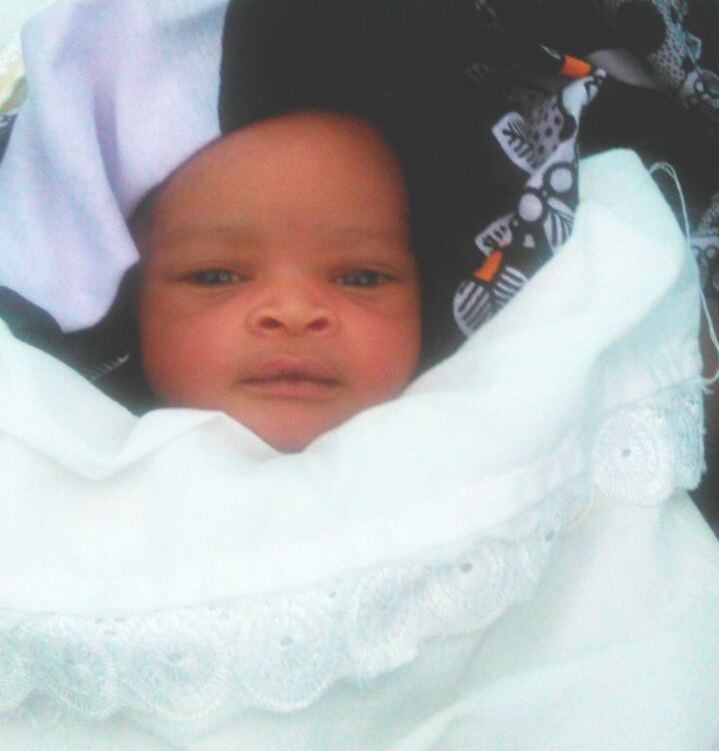 |
| Baby Leisha in Nyahera |
 |
| Josh came to visit, much to Wesley's delight! |
 |
| Along with a whole Lahash team, who rode to Shinyanga and beyond in our "new" car. |
 |
| In Busoka we got to distribute school shoes funded by the "Shoeless Safari" campaign. Those are the girl on the right's very first pair of school shoes. |
 |
| Then we spent time with good friends in Dodoma. |
 |
| Wesley and Gretchen spent time on the slide... |
 |
| ...and the swings near our house. |
09 June 2016
Remembering an Angel
One of my favorite Facebook celebrities is Bunmi Laditan, the creator of the brilliant Honest Toddler website. Today she pointed out how the world is kind of depressing these days, what with the pretty disappointing presidential nominees, sexual assault, white privilege, trolling on the internet, etc. All this, not to mention the ongoing refugee crisis in the Middle East and Europe and 19 Yazidi girls being executed for refusing to sleep with their ISIS "husbands." Bunmi shared a story about a couple who helped her out in the grocery store when she was trying to keep from dropping her son and eggs, and she asked for stories of other angels who remind us that the world isn't a wholly dark place.
It made me think of a story that I don't think I have shared here. Just under two years ago, our family went back to the States for our bi-annual visit. Since Fred and Innocent hadn't been able to get Canadian visas, they went with Wesley to visit supporters in Pennsylvania while I went up to Ontario with Gretchen. On my return, our Canadian friends dropped me off at my hotel in Buffalo, NY, from where I was catching a bus to Pennsylvania early the following day. During the night a freak snowstorm blew in, leaving several inches on the ground and grinding traffic to a halt. The hotel shuttle wasn't moving and taxis were more than an hour away, so with eight-month-old Gretchen in a carrier on my front, I picked up two suitcases and my messenger bag and set off to catch the metro rail six blocks away. I couldn't roll my suitcases, especially in the 6-8 inches on the corners of the streets, and I almost gave up several times. I reached the metro stop in time, but found little shelter from the wind-blown snow. When the train arrived, I struggled to hurl my suitcases up the steps into the train and follow them. I worried about the two block walk remaining at the other end of my train ride. When we arrived, an oldish man who seemed under-dressed for the weather picked up my suitcases and with almost no conversation beyond the word "Greyhound" he carried my luggage to the bus station. I had tears in my eyes, as I seriously don't know if or how I would have managed without his help. He got me through the doors, asked for nothing, wished me well, and left.
When did an angel cross your path?
It made me think of a story that I don't think I have shared here. Just under two years ago, our family went back to the States for our bi-annual visit. Since Fred and Innocent hadn't been able to get Canadian visas, they went with Wesley to visit supporters in Pennsylvania while I went up to Ontario with Gretchen. On my return, our Canadian friends dropped me off at my hotel in Buffalo, NY, from where I was catching a bus to Pennsylvania early the following day. During the night a freak snowstorm blew in, leaving several inches on the ground and grinding traffic to a halt. The hotel shuttle wasn't moving and taxis were more than an hour away, so with eight-month-old Gretchen in a carrier on my front, I picked up two suitcases and my messenger bag and set off to catch the metro rail six blocks away. I couldn't roll my suitcases, especially in the 6-8 inches on the corners of the streets, and I almost gave up several times. I reached the metro stop in time, but found little shelter from the wind-blown snow. When the train arrived, I struggled to hurl my suitcases up the steps into the train and follow them. I worried about the two block walk remaining at the other end of my train ride. When we arrived, an oldish man who seemed under-dressed for the weather picked up my suitcases and with almost no conversation beyond the word "Greyhound" he carried my luggage to the bus station. I had tears in my eyes, as I seriously don't know if or how I would have managed without his help. He got me through the doors, asked for nothing, wished me well, and left.
When did an angel cross your path?
23 May 2016
Fred's New Friends are White (but not in the way you imagine)
As I mentioned in last week's blog post, one of Fred's new projects is to work in local villages to advocate for equal treatment for people with albinism (PWA). As I mentioned a few months ago when our family went to serve at a camp for kids with albinism, the life of PWA in Tanzania is very hard. Along with the physical ramifications of albinism--sensitivity to the sun, susceptibility to skin cancer, eye problems--there are many psychological and emotional attacks as well. Albinism is not well understood here, so families often reject children who are born with albinism or neighbors threaten them with violence. They are mistreated in their communities and live in fear of the black market for the body parts of the "ghosts."
 Fred is starting the "Watu Kama Sisi" or "People Like Us" program in Mwanza, funded by Mennonite Central Committee, to reduce violence against PWA. One of his first items of business was to meet with the local chapter leadership for the Tanzania Albinism Society (TAS). After one meeting, he came away feeling that he had met kindred spirits. The leaders of TAS have suffered much in their lives, including being taken advantage of by potential donors who use their photos to raise money, but never come back to help the community. In spite of all this, they shared openly with Fred and helped him make connections to begin his work in areas most affected by violence and misunderstanding toward PWA.
June 13th is International Albinism Day, and Tanzania is having a huge event this year featuring the extremely popular new president, John Magufuli. The event is in Dar es Salaam, on the exact opposite side of the country from us. The leaders of the Mwanza chapter of Tanzania Albinism Society would love to go represent their community and join hands with their brothers and sisters from around the country. Fred gets to go with his team because they have a grant funding their travel, but they feel a bit like frauds--newcomers flying across the country to learn and network--while their new friends are trying to raise funds to take the 20-hour bus ride to Dar. It's really a risk to their personal health and safety, but they feel it is so important. They are reaching out to local friends to help them collect $800 for their transport, food and accommodations for five days. Would you consider helping them as well?
I know we just asked you all for help to buy our car, but we have to ask you yet again for help. It's only two and half weeks until they need to leave for the event, so please don't wait if you feel moved to give. (By the way, airfare would be about $150 per person instead of $50 for bus fare, so if we can help them reach $1,100 the group can fly, which would be much more comfortable and safe for them.)
The best and fastest way to get money to these deserving friends is through our Paypal account. Just click HERE. Everything that we raise will supplement the local fundraising and help them advocate even more for their community.
 Fred is starting the "Watu Kama Sisi" or "People Like Us" program in Mwanza, funded by Mennonite Central Committee, to reduce violence against PWA. One of his first items of business was to meet with the local chapter leadership for the Tanzania Albinism Society (TAS). After one meeting, he came away feeling that he had met kindred spirits. The leaders of TAS have suffered much in their lives, including being taken advantage of by potential donors who use their photos to raise money, but never come back to help the community. In spite of all this, they shared openly with Fred and helped him make connections to begin his work in areas most affected by violence and misunderstanding toward PWA.
June 13th is International Albinism Day, and Tanzania is having a huge event this year featuring the extremely popular new president, John Magufuli. The event is in Dar es Salaam, on the exact opposite side of the country from us. The leaders of the Mwanza chapter of Tanzania Albinism Society would love to go represent their community and join hands with their brothers and sisters from around the country. Fred gets to go with his team because they have a grant funding their travel, but they feel a bit like frauds--newcomers flying across the country to learn and network--while their new friends are trying to raise funds to take the 20-hour bus ride to Dar. It's really a risk to their personal health and safety, but they feel it is so important. They are reaching out to local friends to help them collect $800 for their transport, food and accommodations for five days. Would you consider helping them as well?
I know we just asked you all for help to buy our car, but we have to ask you yet again for help. It's only two and half weeks until they need to leave for the event, so please don't wait if you feel moved to give. (By the way, airfare would be about $150 per person instead of $50 for bus fare, so if we can help them reach $1,100 the group can fly, which would be much more comfortable and safe for them.)
The best and fastest way to get money to these deserving friends is through our Paypal account. Just click HERE. Everything that we raise will supplement the local fundraising and help them advocate even more for their community.
19 May 2016
10 Great Things in the Past 3 Months
It seems appropriate to resume blogging today, the EIGHTH ANNIVERSARY of starting this blog!! Here's a link to the very first blog post. Now read on for a sadly overdue update.
1. We built a house.

A family in Oregon paid for a new house for a widow with small children. She is one of the clients who we visited back on Christmas Day. In February, Fred organized several women in the community to volunteer making mud and a few construction professionals came in to do the specialty work. After the house was finished, two friends bought Benta a bed and mattress and new kitchen things. The family is so much more secure and happy than they were six months ago!
2. Mama Maisha expanded to 3 new villages.

 The village of Lwanda (our community leader meeting is pictured here...I had no house help that day, so the kids had to come with me!) say they never receive help from outsiders and they are so excited to work with us. The village of Nyahera is familiar to me because our friend Stephen and many of the poor clients we get to serve live in this village.
 3. Wesley turned 4!

We can't believe this kid is growing up so fast. He got a remote-controlled car, which he was very excited about. He's dealing with the drama of feeling all the feelings, but not sure how to process that. He's strong-willed and very loyal. His favorite people are the young men who drive motorcycles and taxis.
4. We had visitors from Mama Maisha US.
 In March we were joined by our co-founder, Dr. Jeff, and one of his colleagues, Dr. Marina, and they helped us with training of our Maternal Health Advocates. After a great few days with our existing and new MHAs, we spent the next week visiting each of our villages.
In Nyahera we had a men's community meeting to talk about their questions about contraception. In Kyangasaga over 150 women showed up to hear about maternal health. One-third of those women were pregnant and received a birth kit as a gift for registering with our new MHAs. In Nyambogo we visited some TBAs, demonstrated the implant form of birth control, and took photos with these infant twins, named Barry and Leisha, who were born prematurely and got supplementary milk support through us. We also served as an ambulance from this remote village for a young woman who had been tossed by a bull and was suffering a concussion. In Lwanda we trained Traditional Birth Attendants and drove through a ravine to visit the closest health facility. It was in Lwanda when I gritted my teeth, crossed my fingers, and gunned it through a puddle as wide as the road. My teammates dubbed me Han Solo and our hired car the "Millennium Falcon." In Roche we doubled up on motorbikes to make it down the cow paths to another community meeting where I gave advice about how men could get their wives to have more sex, among other things.
 5. Inno came home for holidays.

We were so happy to have Innocent home during April! The kids had a lot of fun playing together, and he was a big help with the little kids. Fred was traveling a lot during April, so having another pair of slightly-bigger hands to help out was great. He started at a new school (again) back in January, and he has adjusted so quickly! He was selected to be the "Class Senator" which is kind of like the class prefect, and he's number two in his class as well.
6. We celebrated 5 years of marriage.
 We got away for about 30 hours to Musoma to celebrate at a small hotel on the lake. It's been a wonderful five years, and I'm so grateful to be sharing this adventure with Fred.
 7. We distributed food to needy families.
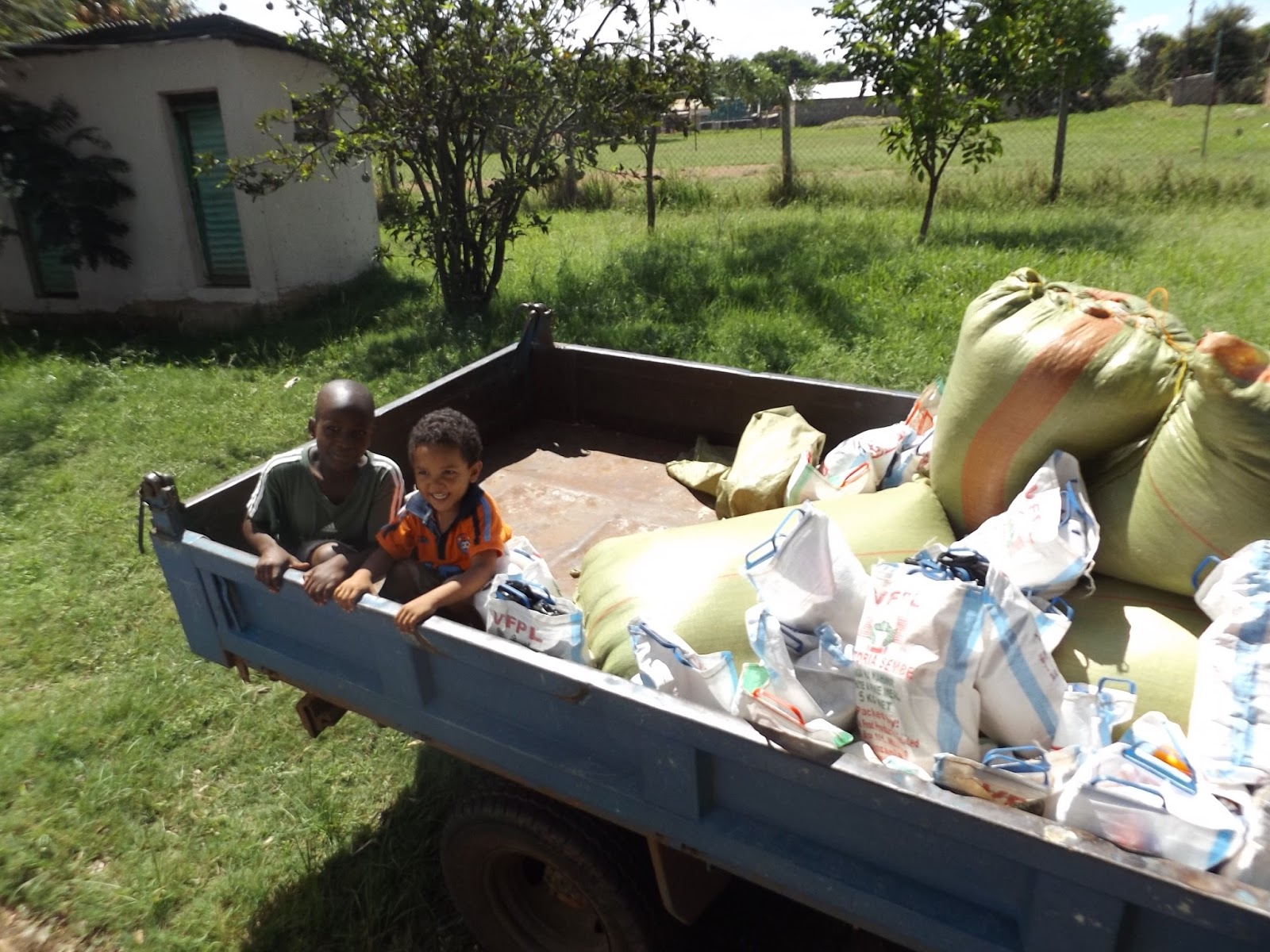
A small church in Medical Lake, Washington, raised money to provide some food for needy families. In April, our whole family got to be part of the first distribution of that food. We met widows and widowers and representatives from child-headed households and paralyzed patients. Each family got maize and beans, salt and oil. After a few more months we will arrange another distribution.

Thank you, Makarios Fellowship!
8. We bought a car!
 Actually, I should say that we were given a car. In less than six weeks, we raised $10,000 to purchase a 24-year-old Toyota LandCruiser in good condition. Many friends gave toward this amazing gift, and we are so grateful. It is already making our life so much easier, and we are eager to use it for village visits for Mama Maisha and for our other clients.
9. We moved to Mwanza.
At the end of April we finished packing up five years of life in Shirati and moved to Mwanza, Tanzania. It's a city right on Lake Victoria, about five hours south of Shirati.

Fred has taken a job doing program development with the African Inland Church of Tanzania, Mwanza Diocese. He's busy launching new programs, many of them based on relationships he developed with people we worked with in Shirati. It's great to see so many people appreciating my husband's work ethic, creative ideas for improving people's lives, and his strict truthfulness regarding finances and outcomes. He's getting into working with people with albinism, doing more training for trauma healing, and helping implement a program to provide income generation for people in rural communities.
 We're living in a church guest house while we wait for our church house to be ready (probably about six months), and the kids are loving their new house, especially since they get to hang out with their friends, Kaleb and Micah, so much more. I have been networking with other organizations which are doing similar work to Mama Maisha and preparing for the upcoming Lahash East Africa Conference, which will be here in Mwanza.
Check back next week to read about a few things that are upcoming!
Subscribe to:
Posts (Atom)